Unlocking Creative Potential: A Guide to High-Resolution Cardboard Photoshop Stamp Brushes
In the ever-evolving landscape of digital art and graphic design, the quest for unique textures and authentic materials is constant. While software tools become more sophisticated, there remains an undeniable charm in organic, tactile elements that ground a digital composition in reality. This is where specialized resources like the 30 Simple Cardboard PS Stamp Brushes come into play. Designed for compatibility across a wide spectrum of Adobe Photoshop versions—from the legacy CS2 to the modern Creative Cloud (CC) suites—these brushes offer a bridge between the physical world of paper and the infinite canvas of digital creation.
For artists, designers, and hobbyists alike, understanding how to effectively utilize high-resolution texture brushes can transform a flat, sterile image into a rich, layered masterpiece. This article explores the significance of these tools, their practical applications, and how they fit into the broader context of modern creativity and visual storytelling.
The Essence of Digital Texture: Why Cardboard Matters
At first glance, cardboard might seem like an mundane material, associated more with shipping boxes than high art. However, in the realm of visual design, texture is king. Cardboard offers a specific type of visual noise: a fibrous, slightly rough, and warm surface that implies durability, recycling, craft, and earthiness. When applied digitally, it breaks up the perfection of pixel-perfect lines, adding a sense of history and touch to an image.
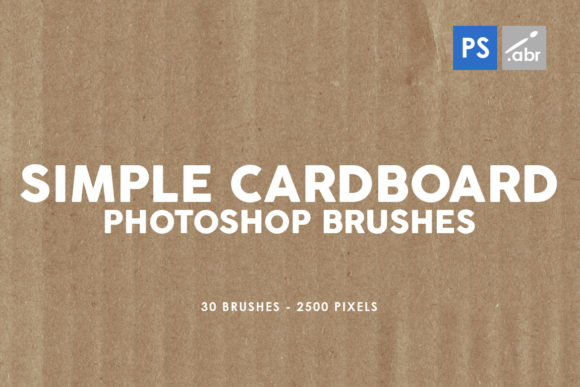
The collection known as SIMPLE CARDBOARD PAPER PHOTOSHOP STAMP BRUSHES consists of 30 distinct variations. Each brush is crafted from high-resolution images, boasting a size of 2500 pixels. This resolution is critical. In digital imaging, low-resolution textures often appear blurry or pixelated when scaled up, ruining the illusion of realism. A 2500-pixel source ensures that whether you are designing a small web icon or a large-format print poster, the grain of the cardboard remains crisp and detailed.
Bridging the Gap Between Old and New Software
One of the most significant features of this brush set is its universal compatibility. The digital design community is fragmented across various software generations. Some professionals cling to older versions like Photoshop CS2 due to workflow habits or hardware limitations, while others utilize the cutting-edge AI features of the latest CC subscriptions.
Many premium assets today are locked behind newer file formats or require subscription-based libraries, leaving users of older software behind. These 30 brushes are engineered to function seamlessly across all versions. This inclusivity democratizes access to high-quality tools, ensuring that a student using an older laptop or a veteran designer maintaining a legacy system can achieve the same professional results as someone with the newest setup. It emphasizes a core principle of good design: the tool should never be the barrier to creativity.
Practical Applications in Modern Design
How does one actually use a "cardboard stamp" in a digital workflow? The versatility of these brushes extends far beyond simply making an image look like a box. They serve as foundational elements for a variety of creative disciplines.
Photo Overlays and Digital Manipulation
In digital photo manipulation, the goal is often to blend disparate elements into a cohesive whole. A common challenge is making a subject look like they belong in a specific environment. By using these cardboard brushes as photo overlays, an artist can introduce a unifying texture layer over a composite image.
For example, imagine creating a vintage-style advertisement. You have a modern photograph of a product, but you want it to look like a printed flyer from the 1980s. Applying a cardboard texture overlay softens the digital sharpness, adds subtle imperfections, and mimics the look of ink sitting on rough paper. This technique is essential for creating mood and atmosphere without needing complex lighting setups.
Visual Effects for Games and Concept Art
The gaming industry relies heavily on concept art to establish the tone of a world before a single polygon is modeled. Indie game developers, in particular, often seek aesthetic styles that stand out from the hyper-realism of AAA titles. A "paper craft" or "diy" aesthetic is increasingly popular in platformers and puzzle games.
These 30 brushes can be used to generate visual effects such as dust, debris, or environmental wear and tear. If a character in a game kicks up dirt, a custom brush stamp based on torn cardboard fiber can create a stylized particle effect that matches a hand-crafted art style. Furthermore, concept artists can use these stamps to quickly block out environments, suggesting wooden structures or makeshift shelters with a few clicks, speeding up the iteration process.
Decorative Elements and Branding
In the world of branding and packaging design, the "eco-friendly" look is a powerful marketing tool. Companies want to convey sustainability, and nothing says "recyclable" quite like the texture of cardboard. Graphic designers can use these brushes to create decorative elements for logos, labels, and social media graphics.
Consider a coffee shop launching a new line of organic beans. Using a cardboard texture as a background or a border element on their digital menus instantly communicates their brand values. It adds a tactile quality to the screen, inviting the user to imagine holding the actual product. This psychological connection is a potent tool in marketing.
Understanding the Technical Advantages
To fully appreciate the value of this specific set, it is helpful to understand the technical mechanics of Photoshop stamp brushes. Unlike pattern fills, which tile repeatedly and can create obvious, unnatural seams, stamp brushes allow for precise placement. You decide exactly where the texture appears, how it rotates, and how it interacts with underlying layers.
The fact that these are high-resolution images converted into brushes means they retain the complex lighting data of the original photograph. Shadows within the fibers of the cardboard are preserved, allowing them to interact realistically with blending modes like Multiply, Overlay, or Soft Light. This depth is what separates amateur edits from professional work.
- Versatility: With 30 different variations, the user avoids repetition. Using the same stamp twice in a project can look lazy; having a diverse library ensures every application feels unique.
- Efficiency: Instead of photographing your own cardboard, scanning it, cleaning up the dust, and converting it to a brush (which can take hours), you have instant access to ready-to-use assets.
- Non-Destructive Workflow: Because these are brushes, they can be applied on separate layers. This allows designers to adjust opacity, color, and mask areas without permanently altering the original artwork.
Common Misunderstandings About Texture Brushes
A common assumption among beginners is that texture brushes are only for creating "grunge" or dirty looks. While they are excellent for that, their utility is much broader. A subtle application of a light cardboard texture can add warmth to a portrait or give a clean vector illustration a hand-made feel without making it look old or worn.
Another misconception is that high-resolution brushes will slow down the computer. While true for massive, canvas-sized patterns, stamp brushes are generally efficient because they are rendered only where the user clicks or drags. The 2500-pixel size strikes a perfect balance: large enough for detail, but manageable for system performance.
Integrating Creativity into Daily Workflows
In education and business presentations, visual engagement is crucial. Teachers creating digital handouts or businesses designing internal newsletters can use these textures to make dry information more approachable. A timeline created with cardboard-textured blocks feels more like a craft project and less like a corporate spreadsheet, potentially increasing audience retention and interest.
Moreover, for those learning digital art, experimenting with textures is a vital step in developing an eye for detail. It teaches the importance of light, shadow, and surface interaction. By manipulating these 30 brushes, students learn how real-world materials behave in a virtual space, a skill that translates to 3D modeling and animation as well.
Conclusion: Elevating Your Digital Toolkit
The 30 Simple Cardboard PS Stamp Brushes represent more than just a downloadable file; they are a gateway to richer, more textured digital storytelling. Whether you are a seasoned professional working in the latest version of Photoshop CC or a enthusiast utilizing CS2, these tools provide the necessary ingredients to break the monotony of smooth digital gradients.
By incorporating high-resolution, organic elements into your projects, you invite a sense of humanity into your work. From game development and photo manipulation to branding and education, the applications are limitless. In a digital age that often feels too polished and perfect, the rough, warm embrace of a cardboard texture reminds us of the tangible world, proving that sometimes, the simplest materials make the strongest visual statements.
As you explore these brushes, remember that the best designs often come from the unexpected combination of the old and the new. Let the fiber of the paper guide your next creative endeavor, and watch as your digital compositions gain a new level of depth and character.