Evaluating Seblaque: A Bold Brushed Font for Modern Design
In the landscape of contemporary typography, designers often seek typefaces that bridge the gap between raw artistic expression and functional readability. Seblaque emerges as a distinct option in this category, defined as an all-caps brushed font with a bold twist. For professionals evaluating font libraries for branding, packaging, or digital headers, understanding the specific characteristics and limitations of such a typeface is essential. This analysis explores the attributes of Seblaque to help determine if it aligns with specific project goals.
Defining the Aesthetic of Seblaque
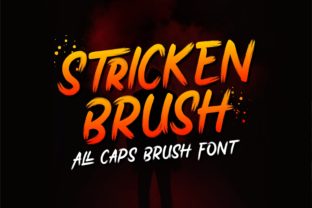
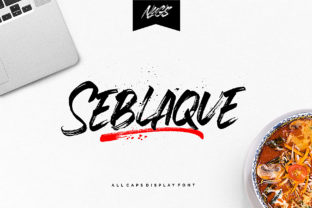
At its core, Seblaque is characterized by its uppercase-only structure and a texture that mimics the stroke of a dry brush. Unlike standard sans-serif or serif fonts that rely on geometric precision, this typeface introduces organic irregularity. The "bold twist" mentioned in its description refers to the heavy weight of the strokes combined with sharp, dynamic terminals that suggest speed and energy.
The all-caps restriction is a significant design choice. It immediately establishes a tone of authority and loudness, removing the nuance of lowercase letterforms which often convey approachability or narrative flow. When rendered, Seblaque offers a contemporary charm, leaning into trends seen in streetwear branding, craft beverage labels, and modern editorial headlines. The texture provides a tactile quality that can make digital designs feel more physical and handcrafted.
Strategic Applications and Benefits
Designers considering Seblaque are typically looking to solve specific visual problems where neutrality is not the goal. The primary benefit of this font lies in its ability to command attention. In a crowded visual environment, the high contrast and textured edges of Seblaque can break through the noise more effectively than a clean, flat vector font.
There are several scenarios where Seblaque serves as a strong fit:
- Brand Identity for Lifestyle Products: Brands targeting a youthful, energetic demographic often benefit from the raw aesthetic. The font suggests movement and authenticity, which resonates well with sectors like skate culture, fitness, or artisanal food products.
- Short-Form Headlines: Due to its all-caps nature and heavy weight, Seblaque excels in short bursts of text. It is ideal for poster titles, album covers, or hero sections on websites where the word count is low but the impact needs to be high.
- Textural Layering: The brushed effect allows the typography to act as a graphical element rather than just information carrier. It can be overlaid on images without requiring heavy drop shadows or outlines to create separation, as the internal texture of the letters provides natural contrast.
The practical advantage here is efficiency. Using a font like Seblaque can reduce the need for additional graphic embellishments to achieve a "grunge" or "hand-made" look, streamlining the design workflow while maintaining a cohesive stylistic direction.
Tradeoffs and Functional Considerations
While the aesthetic appeal of Seblaque is evident, an objective evaluation requires acknowledging its limitations. The most critical tradeoff is legibility. Brushed fonts inherently sacrifice clarity for style. The irregular edges that provide character can also create visual noise, making the text difficult to read at smaller sizes or from a distance.
Furthermore, the absence of lowercase letters restricts the tonal range of the communication. All-caps text is often interpreted as shouting or asserting dominance. While this is desirable for a call-to-action or a brand name, it is rarely suitable for body copy, long-form articles, or contexts requiring a gentle, conversational tone. Users expecting a versatile workhorse font for both headings and paragraphs will find Seblaque insufficient.
Another consideration is the context of use. The "contemporary charm" of Seblaque is tied to current design trends. Heavily textured, distressed typography cycles in and out of popularity. Designers building a brand identity intended to last decades without revision should consider whether the specific "brushed" look might date the project faster than a more neutral grotesque or humanist sans-serif would.
Comparative Analysis and Alternatives
When deciding whether to proceed with Seblaque, it is helpful to compare it against alternatives based on the project's specific requirements. If the goal is to achieve a bold, uppercase statement but legibility is a higher priority, a geometric sans-serif with a heavy weight (such as Futura Extra Bold or Helvetica Black) might be a more prudent choice. These alternatives offer similar impact without the visual friction of the brush texture.
Conversely, if the objective is to capture a hand-drawn, organic feel but the project requires mixed case for readability, a script font or a handwriting-style display font would be more appropriate. Seblaque occupies a niche middle ground: it is organic like a script but rigid like a block letter.
For projects requiring extensive body text, pairing Seblaque with a highly readable serif or a clean sans-serif is necessary. Relying on Seblaque for anything beyond a headline or a logo mark will likely result in user fatigue and reduced comprehension. The decision ultimately rests on the hierarchy of information; if the text is decorative first and informational second, Seblaque is a viable candidate.
Making the Final Decision
Selecting a typeface is a process of matching form to function. Seblaque is not a universal solution, but rather a specialized tool. It is best deployed when the design brief calls for energy, modernity, and a departure from corporate cleanliness.
Before integrating Seblaque into a final layout, designers should test it across various mediums. How does the brushed texture render on low-resolution screens? Does the all-caps structure hinder the scanning of the message? If the project involves international audiences, one must also consider that all-caps text can sometimes be harder to parse for non-native speakers compared to standard sentence case.
In conclusion, Seblaque offers a compelling option for adding a bold, contemporary twist to visual projects. Its strength lies in its ability to inject personality and motion into static designs. However, its utility is bounded by legibility constraints and tonal limitations. By carefully weighing the need for stylistic flair against the requirement for clear communication, designers can determine if Seblaque is the right typographic voice for their specific narrative. It is a font that demands to be seen, but it should be used with the discipline to ensure it is also understood.